09Feb 2022
Webinar: Campaign finance laws - is East Africa ready to curb monitized politics?
11:28 - By Magnus Ohman
For further information, see CONCEPT_NOTE_EAC_MONEY_IN_POLITICS_WEBINARpdf.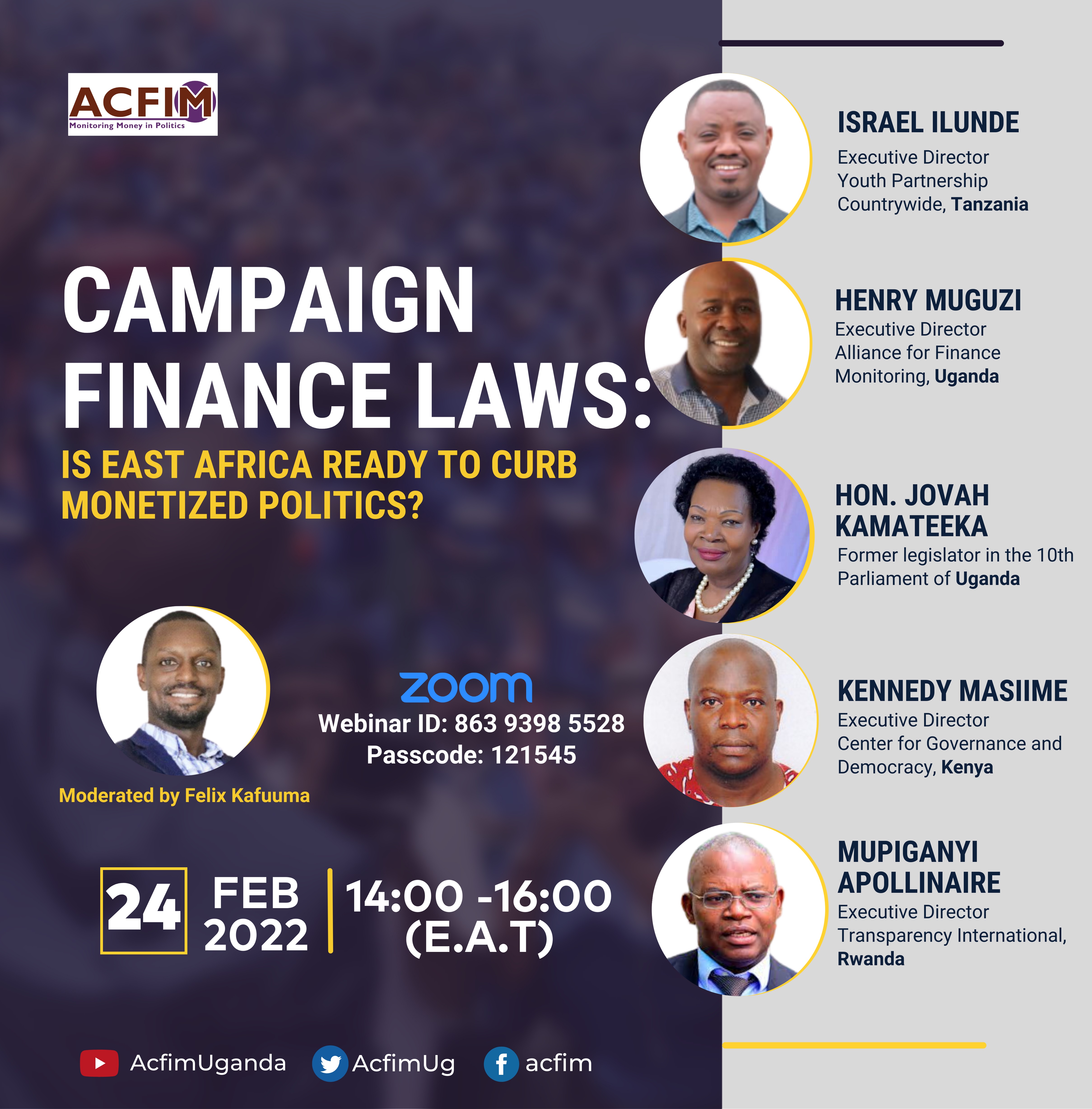
08Feb 2022
Calls for papers, IPSA RC20 meeting, Prague July 19-21 2022
09:40 - By Magnus Ohman
Dear members of IPSA RC 20,
We waited with the call for papers until the last minute possible; so as to make sure that the meeting will not be disturbed by Omicron or any other COVID 19 offspring. We are issuing this call for papers in the hope that we have reached this stage.
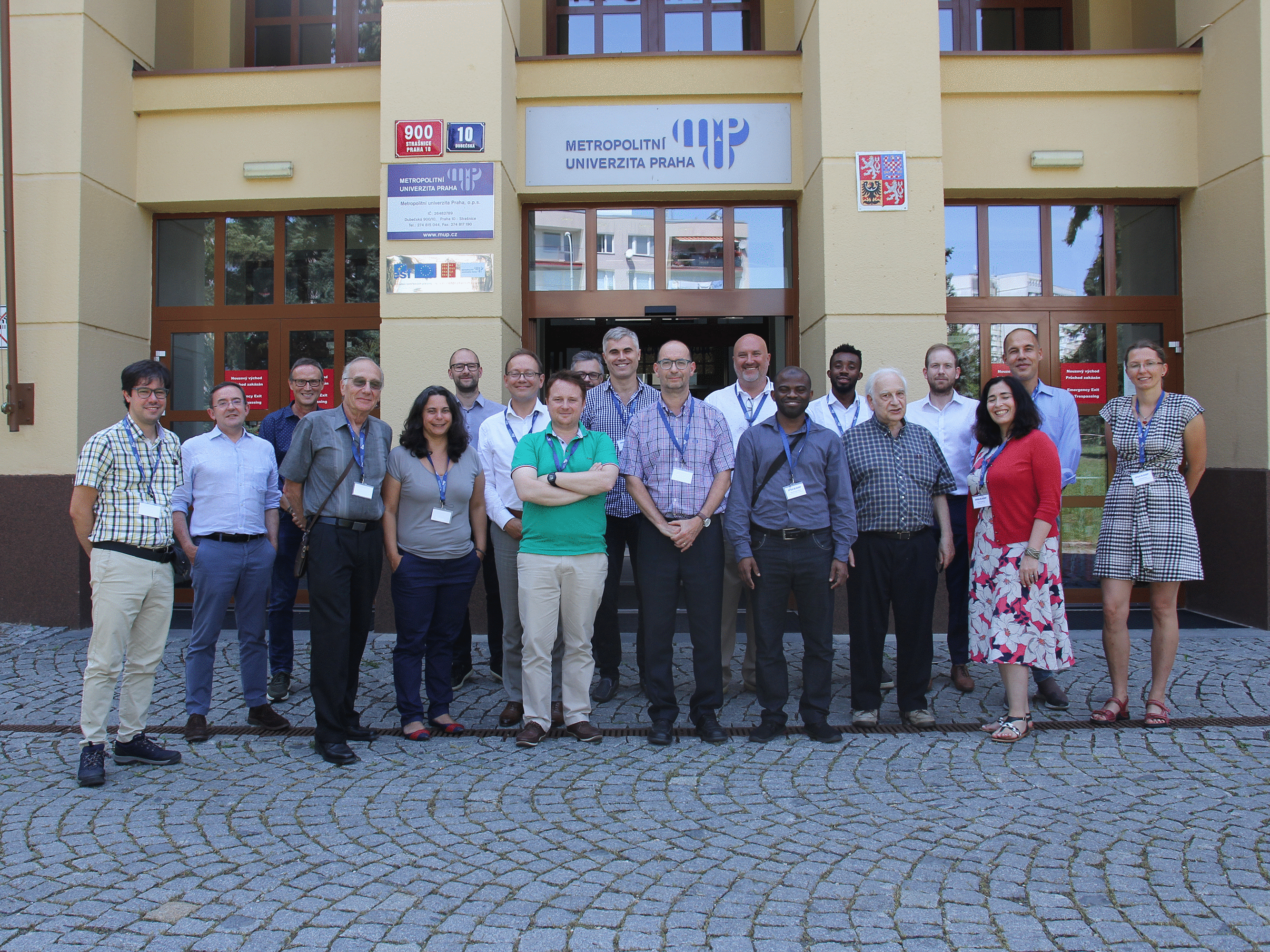
Details - The meeting will take place in the Metropolitan University of Prague. This is an occasion to thank in all our names the University’s rector, our friend prof. Michal Klima. Although there is no participation fee, hotel and food will be at the responsibility of the members. The Metropolitan University will assist us in negotiating the price in a nearby hotel. We will notify all participants in the meeting once time draws near. Since we intend on starting on the 19th morning, please be prepared to arrive on the 18th. We intend to end on the 21st evening, so that I recommend staying the night of the 21st as well.
Paper proposals - Please send me the title of your paper and a synopsis (up to 250 words) NO LATER than March 10, 2022. Suggestions for panels are also welcome. Please send any such suggestion along with the particulars of the papers included. As usual, the typical panel in our meetings is 3 papers with the time devoted to each paper is about 20 minutes. We would expect also a Q/A and general discussion to follow each panel. I hope to hear from you at your early convenience.
Jonathan Mendilow, Chair, IPSA RC 20
09Jan 2020
Message from the Chair to RC members
10:24 - By Magnus Ohman
Dear all,
It was a great honor to be nominated at the conference in Brisbane as Chair of RC 20 for another term. I hope I will not disappoint you. Part of the excitement that I believe we all share stems from the fact that our field of study is relatively new. In a world that is fast changing is becoming ever more central in public opinion and the academe alike. Irrespective of early individual efforts (e.g. James Pollock Jr.), political finance emerged as a full-fledged academic subfield only with the formation of the International Study Group on Political Finance in the 1960’s. The systematic study of political corruption (again, notwithstanding such thinkers as Edmund Burke) became a field of academic study even later, once it became understood that corruption is not a childhood sickness among newly independent countries. Both subfields share problems of sources and the difficulty of comparing very different systems, and especially the study of political corruption is a field that is still hampered by problems of definition: what is corruption in one context and time need not be so in others. We are therefore in the first floor of the elevator and the waves of revolt against the elites and against perceived corruption that is sweeping practically all parts of the current world only magnifies the fact. This is one of the reasons we are proud of our ability to meet every year as scholars and friends, discuss our research, and share our contributions with the wider academic and public communities in the form of journal articles and edited volumes. Our last meeting, in Curitiba, Brazil, July 1-3 , 2019 was held under the auspices of our Brazilian members whose efforts in producing the meeting and arranging its organizational as well as academic contents is very much appreciated. Our next meeting will be the all –IPSA conference in Lisbon and at the moment of writing we have already slated 17 panels. In all probability this number will actually grow. For one of the newest and smaller RC ‘s, such a record number points to the excitement and dedication of the membership.
As usual, we intend to publish as many of the papers as possible. We have so far published three volumes (based on our meetings in Ljubljana, Paris, and Aix ) with Rowman and Littlefield (Lexington) press, a Handbook of political party Funding and attached blog by Edward Elgar, and only this year another volume on corruption and transitions by Vernon.The latter was published only in June and has already been reissued in soft cover form. A few words about them are added in the section devoted to new publications. Here suffice it to say that the Handbook contains 21 chapters by members of the RC and additional 6 by guests who, I hope, will continue to stay in touch. The last book contains 13 chapters, all except one by members of the RC. We are right now in the process of editing yet another book on populism, political finance and corruption on the basis of the papers delivered in Curitiba.
I would like to end this report with special thanks to our site manager, Magnus Ohman. We join his effort to make the RC site a ‘meeting point’ for ideas, announcements, and anything you would like to share. Please send any communications to Magnus. This is also an invitation to send him your own papers (because of copyright issues, only such that had been already published or offered in previous RC meetings and IPSA conferences) and any news that could interest us all. This is an hitherto underexploited resource and we should use it.
I look forward to hearing from you.
Jonathan Mendilow, Chair, RC 20
09Jan 2020
New books
10:22 - By Magnus Ohman
Jonathan Mendilow and Eric Phelippeau (eds.), Handbook of Party Funding (Cheltenham, UK: Edward Elgar, 2018) ISBN 978 1 78536 796 0 (cased); 978 1 78536 797 7 (eBook).
Jonathan Mendilow and Eric Phelippeau, Political Corruption in a World in Transition (N.Y and Malaga, Spain: Vernon 2019 ISBN 978-1-62273-332-3
page 2 of 2 - next entries »